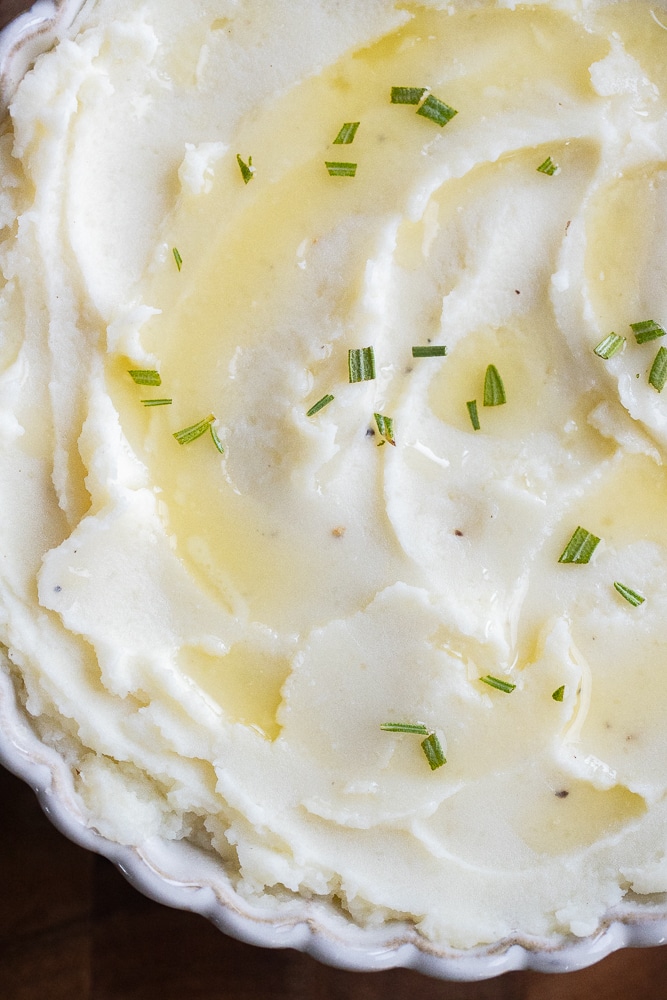
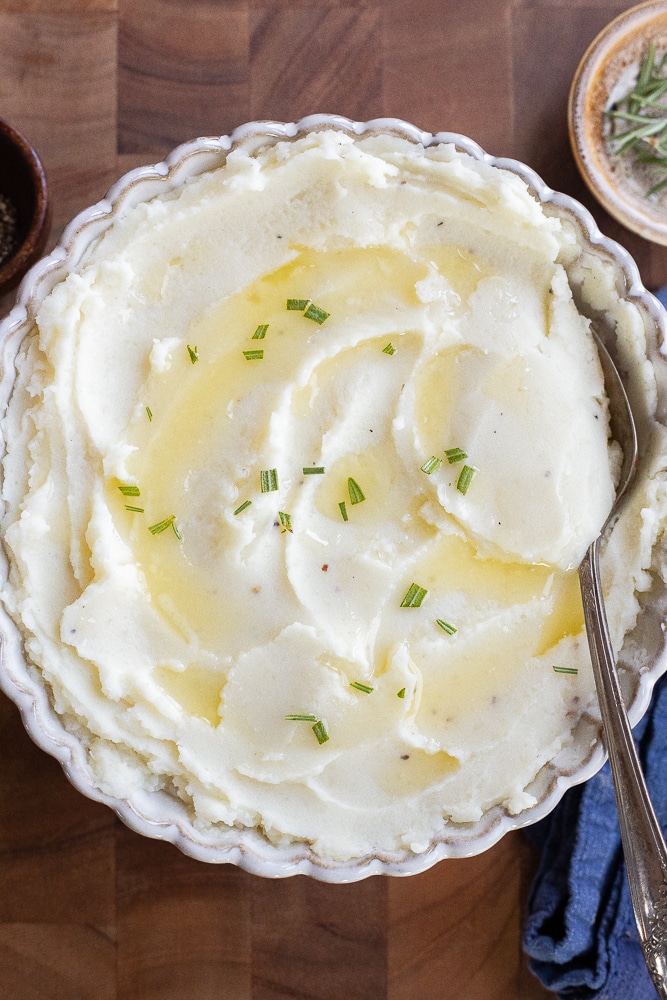
Mashed potatoes are such a classic holiday side dish, and today I’m sharing my recipe for the best Creamy Mashed Potatoes. You don’t need tons of fancy ingredients–just butter, milk, salt, and pepper–to make this cozy holiday side dish. These easy mashed potatoes can be prepped ahead of time, and even frozen, until ready to use. Enjoy as a holiday side dish or a regular dinner side.
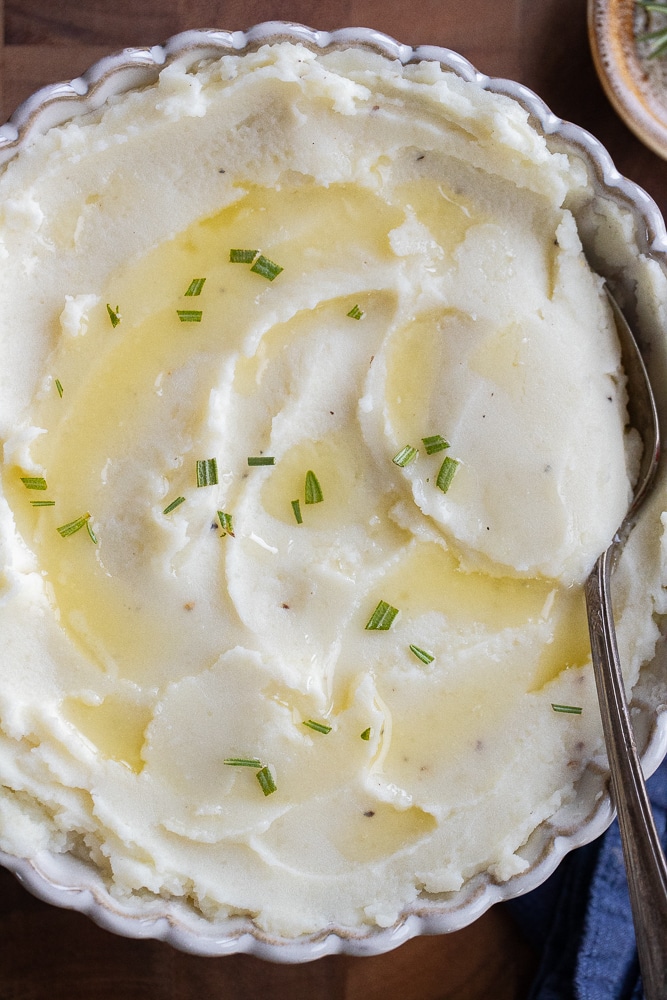
I like to think of myself as somewhat of a mashed potato expert. As a child, they were pretty much the only thing I would eat on the Thanksgiving table, and I make them often as an adult. I’ve shared a few flavored mashed potato recipes over the years, but this super-creamy classic is my all-time favorite. They’re easy to make and complement almost any veggies and protein you want to pair with them.
Why You’ll Love This Easy Mashed Potato Recipe
- Can be prepped ahead of time – Mashed potatoes can be prepped a few days in advance and reheated right before dinner. They can be reheated on the stovetop or in the oven. They may need a little extra milk to loosen them, but they will still taste fresh and flavorful.
- Easy to make – Mashed potatoes are probably one of the most low-maintenance of the Thanksgiving sides. All you have to do is peel and dice potatoes, boil until fork-tender, and then mash well with milk, butter, and seasonings. They might not look as fancy as scalloped potatoes, but in my opinion, mashed potatoes are all you need.
- Only a few ingredients needed – You only need about five main ingredients to make these ultra-creamy mashed potatoes. I do love playing around with fun mashed potato flavors and additions, but I usually find myself craving a classic version packed with butter, buttermilk, and well salted.
Tips For Making The Best Mashed Potato Recipe
- Don’t over-boil the potatoes – I used to think it would make the mashed potatoes creamier if I boiled them until they fell apart, but it can actually water-log them, creating mashed potatoes with too much water and not much flavor. Cook until the first sign that the fork can easily pierce through the potato.
- Use a potato ricer – I’m not usually big on extra kitchen gadgets, but a potato ricer can be so helpful when making creamy mashed potatoes. Running the cooked potatoes through the potato ricer removes all the lumps and gives the mashed potatoes a smooth, rich texture. If you don’t have a potato ricer, you can use a kitchen sieve or just a regular potato masher.
- Don’t skimp on the salt – Potatoes are pretty mild in flavor by themselves, so they need lots of salt. I like to add salt during cooking, as well as after the butter and milk have been mixed. I also use salted butter, rather than unsalted, but either can be used.
Recipe Ingredients
- Potatoes – Yukon Golds make super-creamy mashed potatoes, and I do use them occasionally, but I find they have a slightly sweet flavor once mashed. Because of that, I prefer russet or Idaho potatoes for my mashed potatoes. I also usually peel the potatoes first, but keeping the skins on does add some nutritional benefit. Any potatoes can be used for mashed potatoes, though.
- Butter – Regular or dairy-free butter will work for this recipe. I prefer to use salted butter because potatoes really absorb salt, so it adds an extra flavor, but unsalted butter will work, too.
- Milk – Any milk can be used in mashed potatoes, as long as it is unsweetened. I prefer buttermilk because of its tangy flavor, but regular or dairy-free milk will also work. Some people love to use cream or half-and-half because it makes the mashed potatoes even richer and creamier.
- Salt + Pepper – Salt is an essential ingredient when making mashed potatoes, so don’t skimp on it. I like to add a big pinch of salt to the water the potatoes cook in, and to season the finished mashed potatoes to taste. Freshly cracked black pepper also goes well and adds a little kick.
- Garlic – Garlic is an optional ingredient, but one that does go well with mashed potatoes. If I’m using garlic, I like to add it to the milk and butter so it can cook a little bit, rather than just adding it raw to the potatoes once they are mashed. Garlic powder is also a great addition if you want a mild garlic flavor.
How To Make The Best Creamy Mashed Potatoes
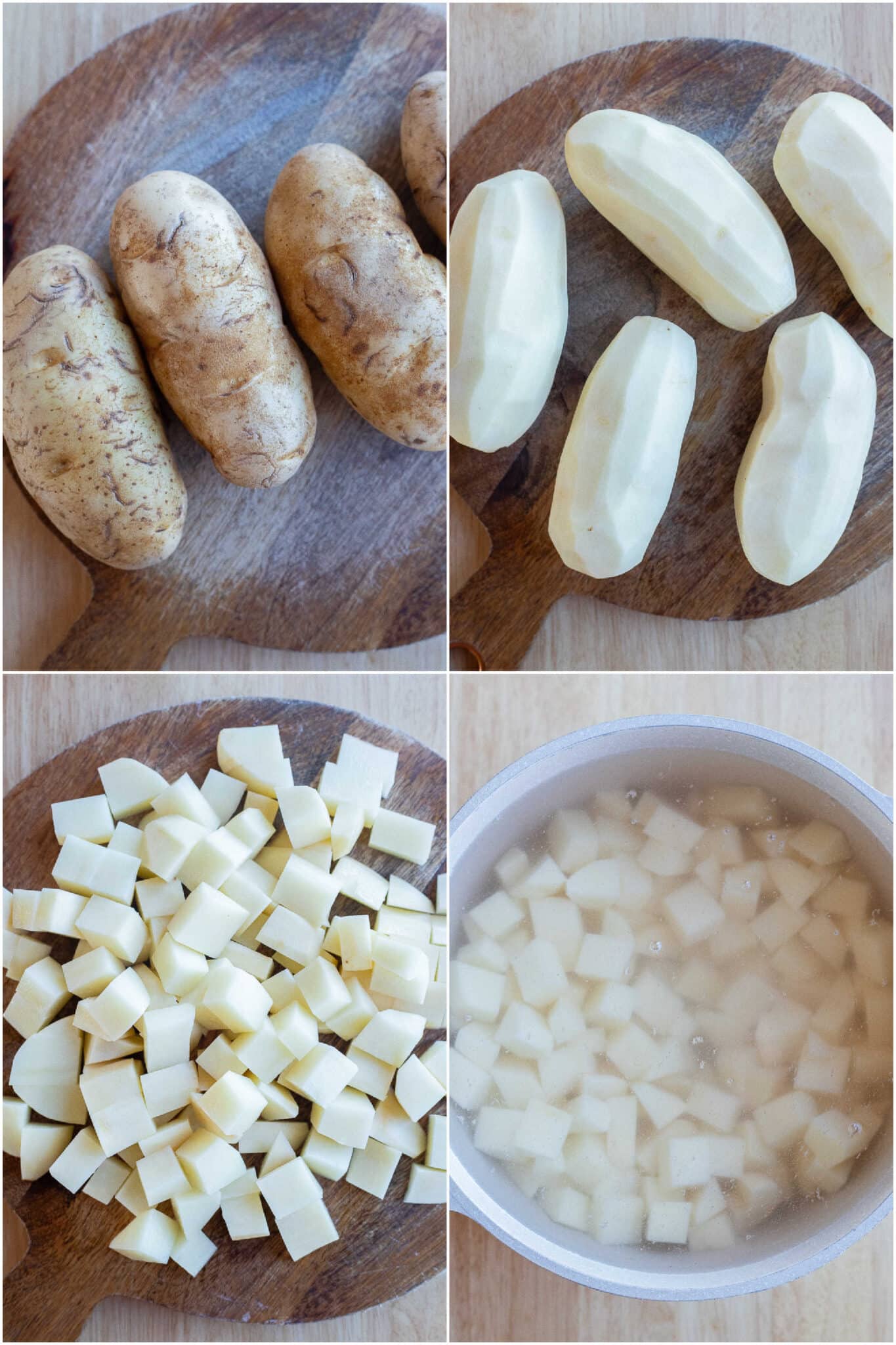
- Wash and peel potatoes, and then dice them into bite-sized pieces. It doesn’t matter what size they are; you want them all to be about the same size so they cook at the same time. You can leave the peels on if you prefer.
- Add diced potatoes to a large pot and then cover with cold water. Add a generous pinch of salt to the water, then place the pot over medium-high heat. Bring water to a boil (about 12-15 minutes) and let the potatoes cook until fork-tender, about 20 minutes once the water is boiling.
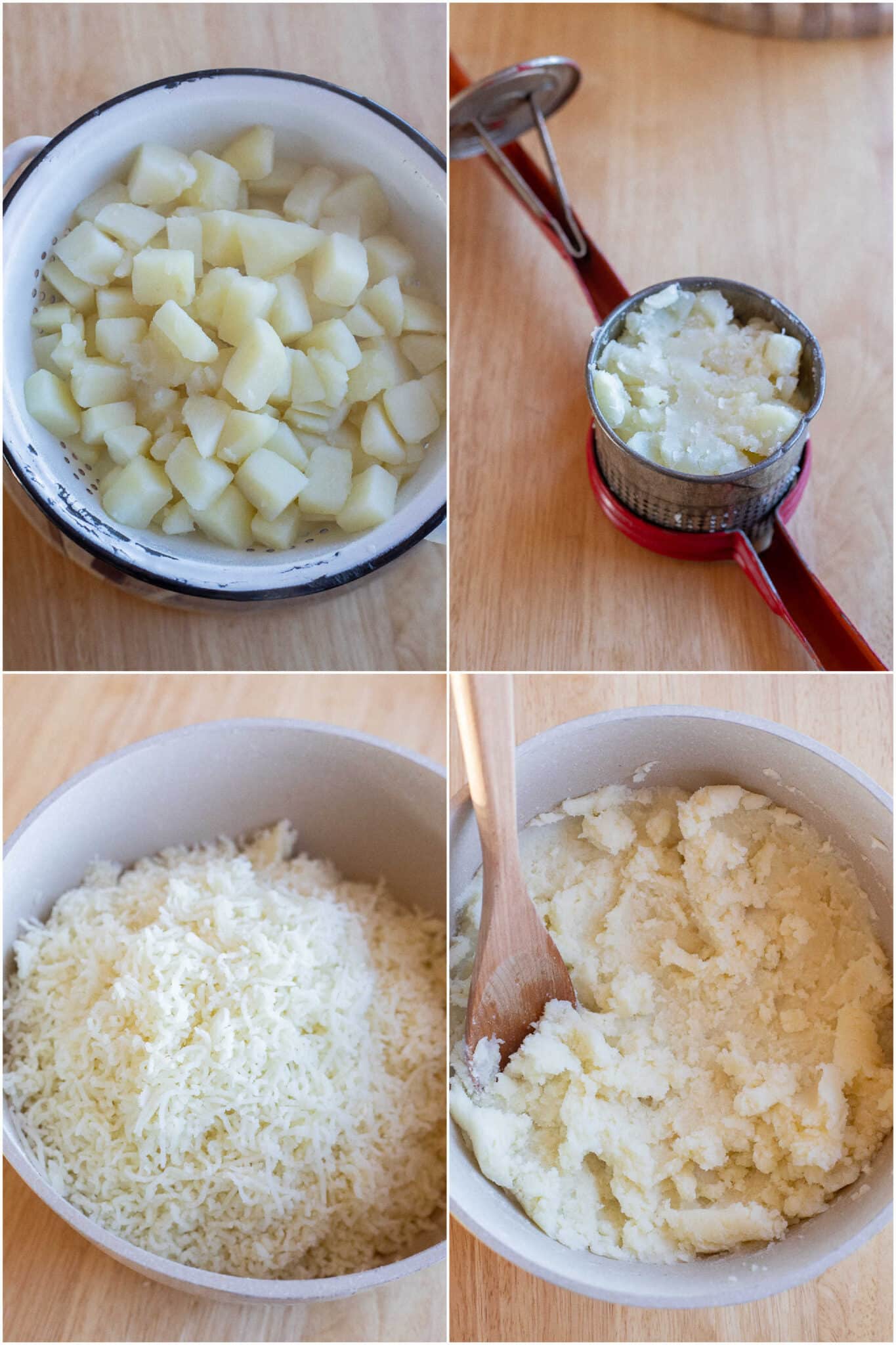
- Drain the potatoes well, then let them sit for a few minutes to allow any excess water to evaporate. Then, you can either add them back to the pot and mash them well with a potato masher, or run them through a potato ricer for super-smooth mashed potatoes. I like using a potato ricer because it makes the mashed potatoes super smooth and helps drain out any excess liquid. If using a potato ricer, you may want to hold it over the sink when you first press down, just in case any water comes out first.
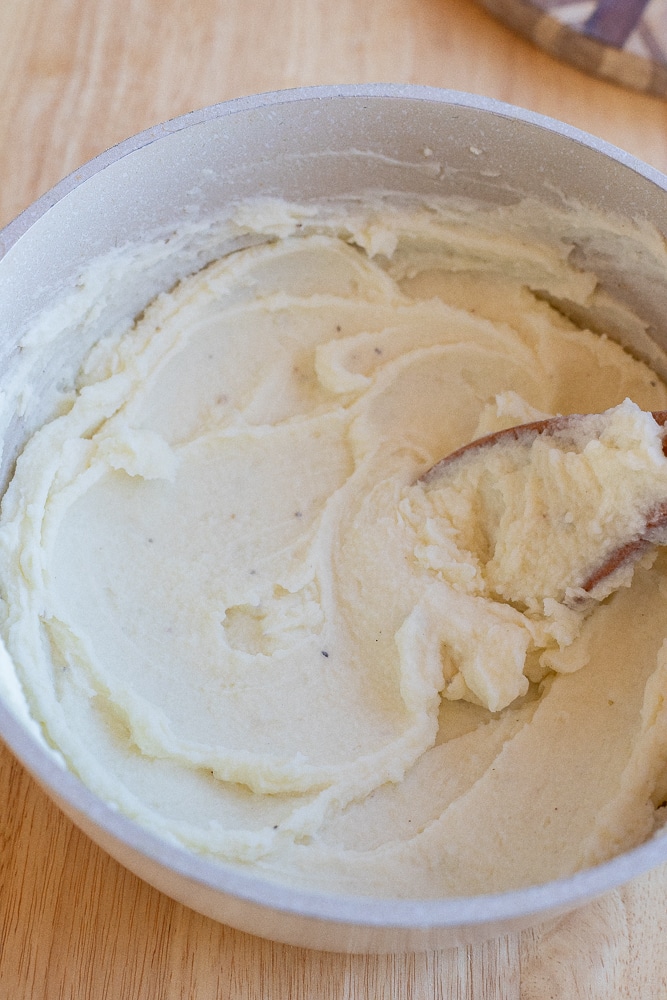
- Turn the heat on low and add in the melted butter. Mix the potatoes with the butter until smooth. Next, pour in the buttermilk and mix again until the desired consistency is reached. If you want your mashed potatoes to be extra loose, you can add more milk. Lastly, season well with salt and black pepper, to taste.
- Mashed potatoes can be enjoyed immediately or set aside until ready to eat. To reheat mashed potatoes, either add them to a baking dish, wrap them in foil, and bake until heated through, or heat them in a pot on the stovetop. You may need to add extra liquid when reheating them, as they can get a little stiff when cooled.
Recipe Frequently Asked Questions
- This recipe is already gluten-free.
- Make these mashed potatoes vegan by using vegan butter and milk.
- Should milk or buttermilk be used to make mashed potatoes? You can really use whichever one you prefer. Milk will do the job well, but buttermilk is creamier and adds a tangy flavor that some people enjoy.
- Can mashed potatoes be made ahead of time? Yes, you can easily make them ahead of time. Store mashed potatoes in an airtight container in the refrigerator for about 4 days. Re-heat in the oven or on the stovetop. You may need to add extra liquid when re-heating.
- Are mashed potatoes freezer-friendly? Yes, they are freezer-friendly. Allow them to cool completely, then store in a freezer-friendly, airtight container for up to 3 months. They may not retain their super-creamy texture once thawed, but they should still have an excellent buttery taste.
- Can additional flavors be added? Yes, you are welcome to add any additional flavors you like to these mashed potatoes. Garlic is an excellent addition for extra flavor, as is mustard or horseradish sauce.
- Do you need to use a potato ricer to make mashed potatoes? No, it is definitely not required to make mashed potatoes, but it does help make them super creamy. If you don’t have a potato ricer, I recommend pressing the cooked potatoes through a mesh strainer to avoid lumps. Otherwise, a potato masher will work just as well.
Have a question I didn’t answer? Ask me in the comment section below, and I will get back to you ASAP!
Looking For More Vegetarian Potato Recipes?
Crispy Cauliflower and Potato Tacos
Cheesy Green Chile and Potato Tacos
Seasoned Grilled Potato Wedges
Potato Egg and Cheese Breakfast Tacos
Print
The Best Creamy Mashed Potatoes
- Total Time: 45 minutes
- Yield: 6-8 1x
- Diet: Vegetarian
Description
Mashed potatoes are such a classic holiday side dish, and today I’m sharing my recipe for the best Creamy Mashed Potatoes. You don’t need tons of fancy ingredients, just butter, milk, salt and pepper, to make this cozy holiday side dish. These easy mashed potatoes can be prepped ahead of time, and even frozen, until ready to use. Enjoy for a holiday side dish or just for a regular dinner side.
Ingredients
- 6-8 medium sized russet potatoes (about 8 cups once peeled and diced)
- 1/2 cup salted butter, melted
- 1/2 – 3/4 cup room temperature buttermilk, depending on what texture you prefer
- Salt and black pepper
- Fresh herbs for topping, if desired
Instructions
- Wash and peel potatoes and then dice them into bite sized pieces. It doesn’t matter what size they are, you just want them to all be about the same size, so that they all have the same cooking time. You can leave the peels on, if you prefer.
- Add diced potatoes to a large pot and then cover with cold water. Add a big pinch of salt to the water and place the pot over medium-high heat. Bring water to a boil (takes about 12-15 minutes) and let potatoes cook until fork tender, about 20 minutes once water is up to a boil.
- Drain potatoes well and then let them sit for a few minutes to allow any excess water to evaporate. Then, you can either add them back to the pot and mash them well with a potato masher OR you can run them through a potato ricer, for super smooth mashed potatoes. I like to use a potato ricer because it makes the mashed potatoes super smooth and it also helps drain out any extra liquid. If using a potato ricer, you may want to hold it over the sink when you first press down on it, just in case any water comes out first.
- Turn the heat on low and add in the melted butter. Mix the potatoes with the butter until potatoes are smooth. Next, pour in the buttermilk and mix again until desired consistency is reached. If you want your mashed potatoes to be extra loose, you can add in more milk. Lastly, season well with salt and black pepper, to taste.
- Mashed potatoes can be enjoyed immediately, or you can set them aside until ready to eat. To re-heat mashed potatoes, either add them to a baking dish, wrap with foil and bake until heated through, or heat them in a pot on the stovetop. You may need to add extra liquid when re-heating them, as they can get a little stiff when cooled down.
- Prep Time: 15 mins
- Cook Time: 30 mins
- Category: Side, Vegetarian
- Method: Stovetop
- Cuisine: American


Leave a Reply